
Santo Domingo, the vibrant capital of the Dominican Republic, holds a singular distinction in the history of the Americas. It is the oldest continuously inhabited European settlement in the New World, a city whose very foundations date back to 1496. As such, it offers visitors a tangible link to the earliest days of European expansion across the Atlantic.
The heart of this historical legacy is the Zona Colonial, a compact, perfectly preserved district recognised as a UNESCO World Heritage Site. This area is far more than a collection of old buildings; it is a walkable, living museum that offers a profound, immersive self-guided historical tour. By choosing to explore the Zona Colonial, travellers can dictate their own pace, linger in sun-drenched plazas, and truly absorb the atmosphere of a city that was the blueprint for all others in the Western Hemisphere.
Visitors can expect a remarkable blend of five-century-old Spanish colonial architecture, punctuated by the vibrant daily life of modern Dominicans, making the experience both educational and deeply engaging. The core of the district is designed for pedestrians, making comfortable shoes and a sense of adventure the only true requirements for this journey through history.
To ensure a smooth and comfortable self-guided experience, you should prepare for the trip with this guide.
This route is meticulously designed to be followed sequentially, commencing at the historic periphery near the Ozama River and progressing inward towards the central plazas and the defining gates of the city, ensuring a logical flow through the centuries of history.
The historical journey commences with the Fortaleza Ozama, a foundational military structure whose construction began shortly after the city's establishment. As the oldest extant military fort in the Americas, its rough-hewn stone walls and imposing presence speak directly to the early anxieties of the Spanish colonists who sought to defend their nascent settlement from buccaneers and rival European powers. The central feature is the Tower of Homage, a medieval keep which visitors should climb not only for its historical importance as the key defensive point but also to gain sweeping views over the Ozama River, a waterway crucial to the colony’s survival.
Adjacent to the fort lies Calle Las Damas, a landmark in its own right. As the New World's very first paved street, it was named for the ladies of the court, led by María de Toledo, who would promenade here. Walking this street offers a direct, tangible connection to the daily life of the early Spanish aristocracy, with its well-preserved colonial buildings housing various government offices and elegant residences.
The walk along Las Damas concludes at the Panteón de la Patria (National Pantheon). Originally built as a Jesuit church, it was later repurposed into the solemn mausoleum for the nation's most revered heroes. Visitors should note the eternal flame guarded by sentinels, which serves as a powerful symbol of continuous national spirit and remembrance for those who secured Dominican independence.
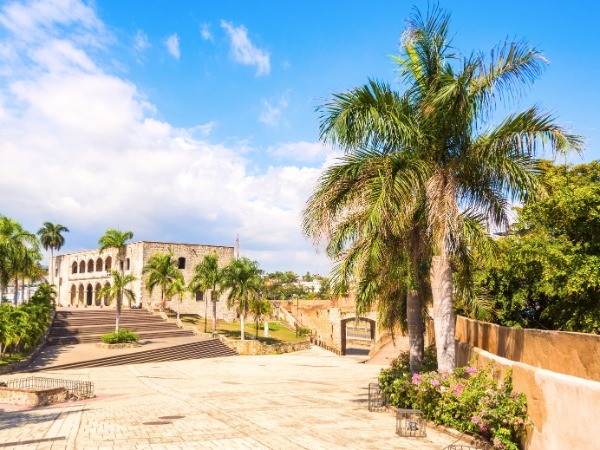
Moving west from the river, the route transitions from military defence to administrative authority at the Alcázar de Colón (Columbus Palace). This magnificent structure, overlooking the river, was the residence of Diego Columbus, son of the famed explorer, and his wife, María de Toledo, during his tenure as Viceroy of the colony.
It is a stunning example of European Gothic and Renaissance architecture adapted to the Caribbean climate. The interior has been expertly restored and curated as a museum, showcasing a collection of period European art, furniture, and objects that vividly recreate the domestic life of the early colonial elite, offering insights into their wealth and taste.
The palace stands sentinel over the vast Plaza de España. This grand square is more than just a viewpoint; it is an important social and cultural space, flanked by the Alcázar and several buildings housing renowned restaurants. Visiting the plaza, particularly in the late afternoon or evening, provides the opportunity to appreciate the illuminated palace façade and observe the lively contemporary atmosphere of the city, perfectly blending historical setting with modern urbanity.
The most significant religious and geographical anchor of the itinerary is the Catedral Primada de América (Santa María la Menor Cathedral). Its historical significance is immense, being the first cathedral consecrated in the Americas. Construction began in 1514, and the resulting architecture is a remarkable blend of late Gothic and Plateresque designs, characterised by intricate stone carving that resembles silverwork. The cool, cavernous interior provides a necessary retreat from the heat and invites quiet contemplation of the centuries of faith and history contained within its walls.
From the cathedral, a short walk brings you to Parque Colón (Columbus Park), the bustling main central square. This park is the undeniable social heart of the Zona Colonial, perpetually animated by locals and visitors alike. It is dominated by a statue of Christopher Columbus, marking his pivotal role in the island's history. The park is the ideal location for people-watching, for observing street performers, and for taking a brief, restorative break under the shade of its mature trees before continuing deeper into the district.
The concluding segment of the route focuses on the visible scars and successes of the colonial era. The Ruinas de San Francisco are profoundly atmospheric, consisting of the impressive remains of the first monastery founded in the Americas. These stone ruins, partially overgrown and open to the Caribbean sky, stand as a powerful reminder of the destructive forces of hurricanes and time. They are particularly noteworthy for their photogenic qualities and their modern use as a venue for local concerts and gatherings.
Nearby, the Hospital San Nicolás de Bari Ruins offer a quieter, yet equally significant, historical marker, pointing to the location of the first hospital established in the New World. From these ruins, you can proceed to Calle El Conde, the district’s main commercial artery. Now a strictly pedestrianised street, it provides a fascinating contrast, showcasing vibrant, modern commerce and daily life set within the historic streetscape.
The self-guided tour culminates at the Puerta del Conde and the adjacent Independence Park. The Puerta del Conde, the original western gate to the walled city, is historically charged; it was here that the Dominican Republic’s independence was declared in 1844, separating the nation from Haitian rule. This final stop offers a moment to reflect on the long journey from colonial outpost to sovereign nation, marking a powerful and symbolic conclusion to the self-guided exploration.
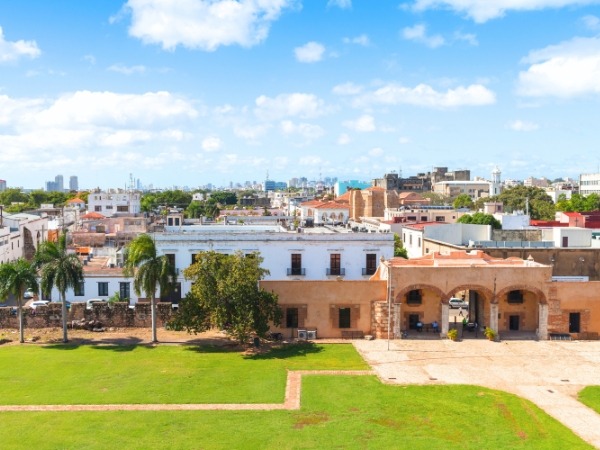
Completing a self-guided exploration of the Zona Colonial is an incredibly rewarding experience. It is a journey that moves chronologically through five centuries of history, from the arrival of the first Europeans to the establishment of the modern Dominican Republic. The ability to navigate the history at one’s own pace allows for a deep, personal connection to the monuments, ruins, and the very ground that laid the foundations for the entire continent.
While the Colonial Zone is perfectly walkable and best appreciated on foot, the historical journey of the Santo Domingo area extends beyond the city walls. Therefore, to ensure a truly comprehensive historic adventure, visitors should consider renting a car to easily visit significant sites just outside the immediate city centre, such as the monumental Columbus Lighthouse (Faro a Colón) or the natural and historical wonder of Los Tres Ojos National Park.
Securing independent transport is the best way to complete your Dominican historic adventure without being constrained by public transport schedules or tour groups. Book your rental car on Final Rentals today, and begin your trip to discover the historical significance of this extraordinary city.