Finalrentals Blog


Published in Driving Category.
The allure of the open road in the Dominican Republic attracts adventurous travellers. While many visitors stick to the comforts of all-inclusive resorts in Punta Cana, those who rent a vehicle can explore a more authentic and stunning side of the island. From the hidden turquoise waters of the southwest to the misty peaks of the central cordillera, the country’s geographic diversity is best experienced by car.
However, this freedom comes with challenges. Driving in the Dominican Republic requires specific skills, resilience, and awareness, as the local driving culture is fast-paced and often creatively interprets traffic rules. By mastering a few essential strategies, you can shift from a nervous navigator to a confident explorer.
Ten Practical Tips for Tourist Drivers
Tip 1: Master the Art of Defensive Driving
Navigating Dominican roads requires a proactive and defensive mindset. Unlike in many Western countries, where drivers expect others to follow traffic rules, in the Dominican Republic, it's safer to assume the opposite. Treat every green light with caution, as drivers often try to beat changing signals or ignore red lights if they think the intersection is clear.
Additionally, understanding the road's unwritten hierarchy is crucial. Larger vehicles, such as guaguas and heavy trucks, assert dominance through their size, so it's essential to yield to them, regardless of road markings. Anticipating unexpected situations at every corner will help keep your reflexes sharp and your journey safe.
Tip 2: Use the Car Horn to Communicate
One of the first things tourists notice in Santo Domingo is the constant use of car horns. What may seem like road rage is actually a nuanced form of communication. A quick tap on the horn signifies, “I am here” or “I am about to pass you”, which is especially important on narrow mountain roads with limited visibility.
Understanding this etiquette can reduce stress while driving. If someone honks as a traffic light turns green, they’re usually just nudging you along, not criticising your skills. Likewise, using your horn to signal your presence when overtaking a slower vehicle helps maintain traffic flow. Learning this automotive language will help you blend in seamlessly.
Tip 3: Prepare for the Toll and Fuel Costs
The Dominican Republic has invested significantly in its highway infrastructure, resulting in high-quality toll roads connecting major tourist hubs. When travelling from Santo Domingo to the eastern coast or northern peninsula, you will encounter several toll booths, or peajes, which mainly accept cash in Dominican Pesos. It's wise to keep a stash of small denominations in your glove compartment for smooth transitions through these checkpoints.
Furthermore, gas stations are generally full-service, meaning attendants will greet you and handle fueling without you needing to exit your vehicle. After refuelling, it's customary to tip these attendants a small amount for their service. While credit cards are accepted at most major stations in cities, it's important to carry enough cash when travelling to remote areas, as card machines may be unreliable.
Tip 4: Stay Alert for Coming Motorcycles
Motorcycles, or motoconchos, are crucial for transportation in the Dominican Republic but pose significant risks for car drivers. They often weave between lanes with incredible agility and frequently carry families or cargo. Many bikes lack working lights or mirrors, making them hard to see, especially at twilight.
Lane splitting is common, so it's vital to check your blind spots repeatedly before any lateral movement. Even when stopped in traffic, a motorcycle may appear in the limited space beside your car. Always look for approaching bikes before opening your door when parked, and maintain a safe distance when following motorcycles, as they may stop suddenly to pick up or drop off passengers.
Tip 5: Beware of Notorious Speed Bumps
The Dominican Republic is known for its notorious speed bumps, called policia acostada or sleeping police. Unlike gentle bumps found in other countries, these can be steep and unpredictable. While some are marked with bright yellow stripes, many blend into the road, making them easy to miss.
To navigate these obstacles, it's best to observe the vehicles ahead; if a car suddenly brakes on an otherwise clear road, a speed bump is likely approaching. When you do encounter one, approaching at a slight angle can help prevent damage to your rental car's undercarriage, saving you from costly fees upon return.
Tip 6: Drive and Park Well in the Capital
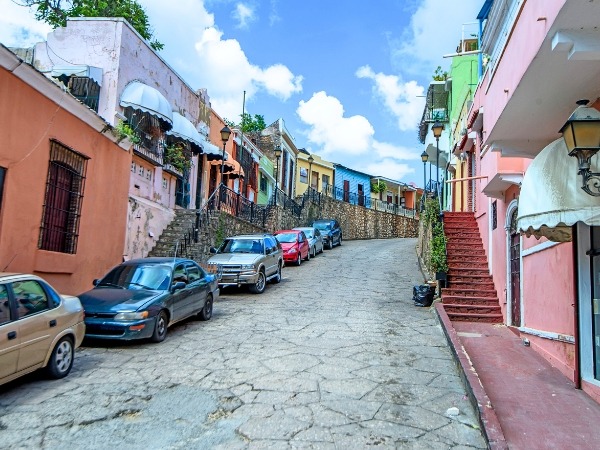
Driving in Santo Domingo is a sensory-rich experience, especially in the National District, the country's economic hub, which is characterised by constant motion and frequent traffic jams. Navigating the narrow cobblestone streets of the Zona Colonial demands patience, as these historic lanes can challenge modern drivers. Pay close attention to one-way streets; the small arrows marking them can easily go unnoticed amid the city's visual chaos.
Parking in the capital also requires a strategy. It's advisable to look for designated Parqueate Bien zones or official parking garages to avoid towing. You’ll often encounter informal parking attendants, or guachimanes, who will watch your car for a small tip. Though informal, this practice is generally seen as a good investment for peace of mind, allowing you to explore the city's renowned dining and rich history without worry.
Tip 7: Utilise Navigation Apps and Maps
In a country where road signs can be sparse or misleading, navigation apps are a lifesaver. These apps are highly effective in the Dominican Republic because it relies on real-time data from a large community of users. It can alert you to sudden traffic jams, police checkpoints, and, most importantly, the location of particularly nasty potholes or speed bumps.
However, technology has its limits. If your journey takes you into the lush central mountains or the remote reaches of the southwest, you may find that the mobile signal becomes intermittent or disappears entirely. Before you leave your hotel, download offline versions of your maps. This ensures that even if you lose your data connection, you will still have a guide to lead you to your destination.
Tip 8: Avoid Night Driving in Rural Areas
When travelling, one crucial piece of advice from seasoned travellers and locals is to avoid driving on rural highways at night due to the lack of consistent street lighting. Outside urban areas, roads can become pitch black, making it difficult to see deep potholes or debris. Additionally, local drivers often use high beams indiscriminately, which can be blinding for oncoming traffic.
The dangers at night extend beyond poor road conditions. It's common to encounter unlit vehicles, such as carts or broken-down trucks, in the middle of the road. Livestock, drawn to the warmth of the asphalt, also often rest on the road at night, increasing the risk of accidents. To ensure a safe journey, it's best to plan your itinerary to arrive at your destination before sunset.
Tip 9: Handle Police Checkpoints Calmly
While driving, you may be flagged down at a checkpoint by the traffic police, known as DIGESETT, or by military personnel, particularly when travelling near the border or on major arterial routes. While this can be intimidating for tourists, these stops are usually routine. The officers may ask to see your documentation, so you should always have your valid driver's licence, your passport, and your rental agreement ready.
When stopped, it is vital to stay calm and polite. Always remain in your vehicle unless specifically asked to step out, and greet the officer with a smile. Do not engage in confrontational behaviour or offer bribes. If you have committed a minor traffic infraction, accept the ticket gracefully. Most officers are helpful and will send you on your way once they have verified that your paperwork is in order.
Tip 10: Obtain Comprehensive Insurance
When driving in the Dominican Republic, it's crucial not to skimp on insurance due to the higher-than-average rate of minor collisions and unpredictable road conditions. Opting for a zero-deductible or full-coverage policy can shield you from financial burdens caused by accidents, even those that are not your fault.
A highly recommended add-on is the Casa del Conductor service, which offers legal protection and a safe place to stay in case of serious accidents involving injuries. This coverage ensures that you're taken to a comfortable facility with legal representation rather than a police station, providing significant peace of mind for a small additional cost.

Explore Santo Domingo and Beyond
Taking the wheel in the Dominican Republic is the ultimate way to bridge the gap between being a mere spectator and an active participant in the island's vibrant culture. While the initial chaos of the city streets might feel overwhelming, you will soon find that there is a rhythm to the madness. By driving defensively, communicating with your fellow drivers, and preparing for road hazards, you transform your vacation into a true journey of discovery.
Do not let the bustling streets of the capital hold you back from the wonders that lie beyond the city limits. With your own vehicle, you can reach the turquoise majesty of Bahía de las Águilas at dawn or find a secluded roadside stand in the mountains serving the best coffee you have ever tasted.
Whether you are navigating the historic heart of Santo Domingo or chasing the sunset along the Samaná coast, the true soul of the Dominican Republic is best discovered at your own pace, one magnificent kilometre at a time. Book your car on Final Rentals today and take control of your journey.